Fatigue Monitoring
for Safety-Critical
Teams
Objective fatigue checks to help teams identify fatigue concerns before safety incidents occur.
Fatigue is operational risk hiding in plain sight
$136B
annual cost to U.S. employers in lost productivity
17.6%
of fatal crashes involved a drowsy driver (2017–2021)
13%
of workplace injuries are linked to fatigue
30%
higher accident rates on night shifts vs. day shifts
WHY FATIGUE CHECKS MATTER
Catch fatigue before
it becomes a safety risk
Fatigue is hard to see before it shows up in safety, performance, or decision-making. NeuroUX gives teams an objective readiness signal early enough to act.
Spot Risk Earlier
Identify elevated fatigue risk before workers begin high-risk tasks.
Support Faster Decisions
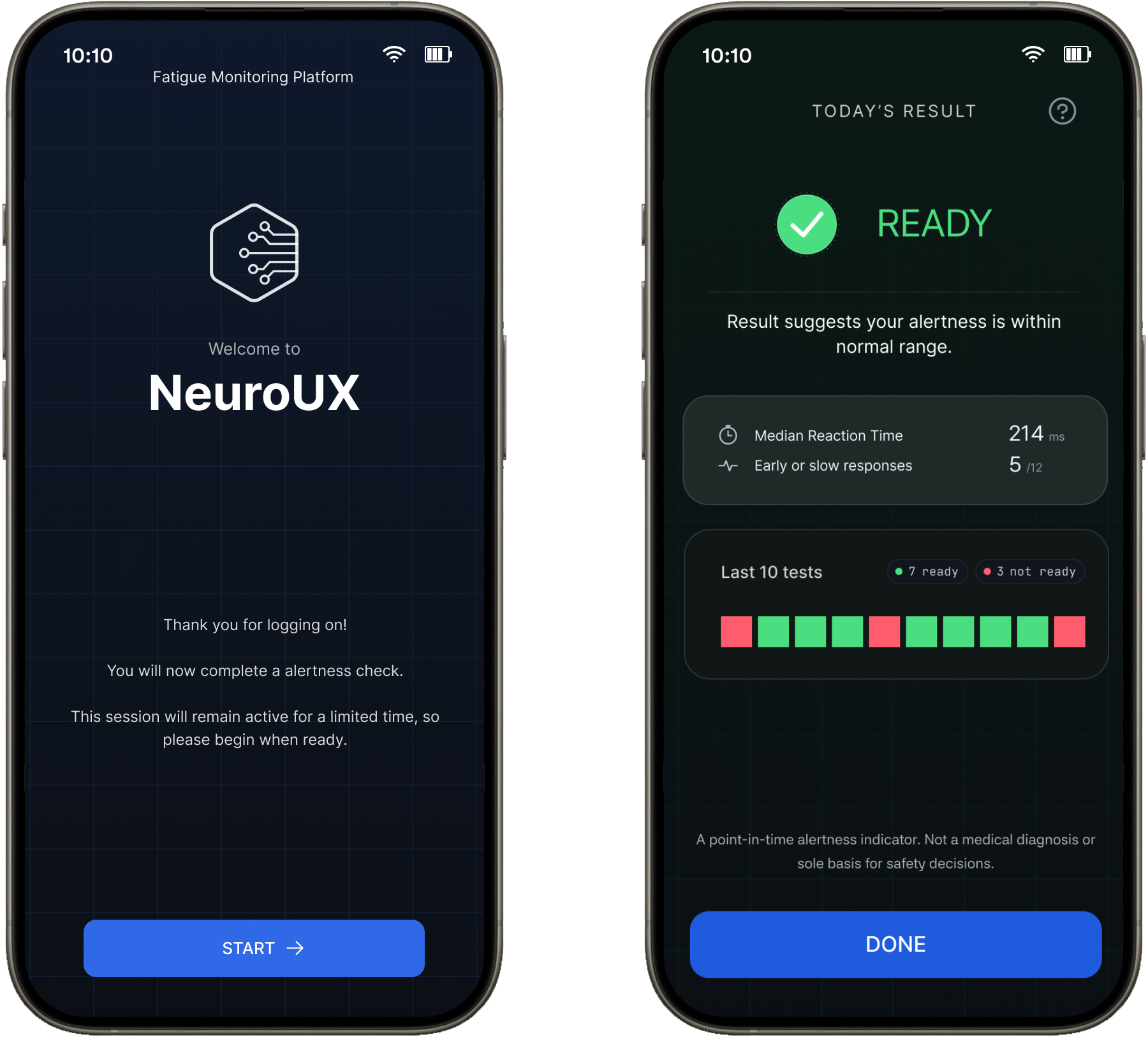
Supervisors receive a clear and immediate Ready/Not Ready result they can act on.
Improve Shift Planning
Track fatigue trends across teams, shifts, and locations to reduce long-term risk.
HOW IT WORKS
NeuroUX Fatigue Monitoring Platform
01
Personalized Baseline
Results are measured against each worker’s personal baseline, not a generic standard, so fatigue risk is identified more accurately.
02
Test Before High-Risk Work
Conduct fatigue checks pre-shift, post-shift, before safety-critical work, or on an ad hoc basis when fatigue concerns arise.
03
Ready/Not Ready
Supervisors are alerted when a worker is identified as Not Ready, making it easier to monitor workforce fatigue in real time.
PLATFORM FEATURES
Everything teams need to
manage fatigue proactively
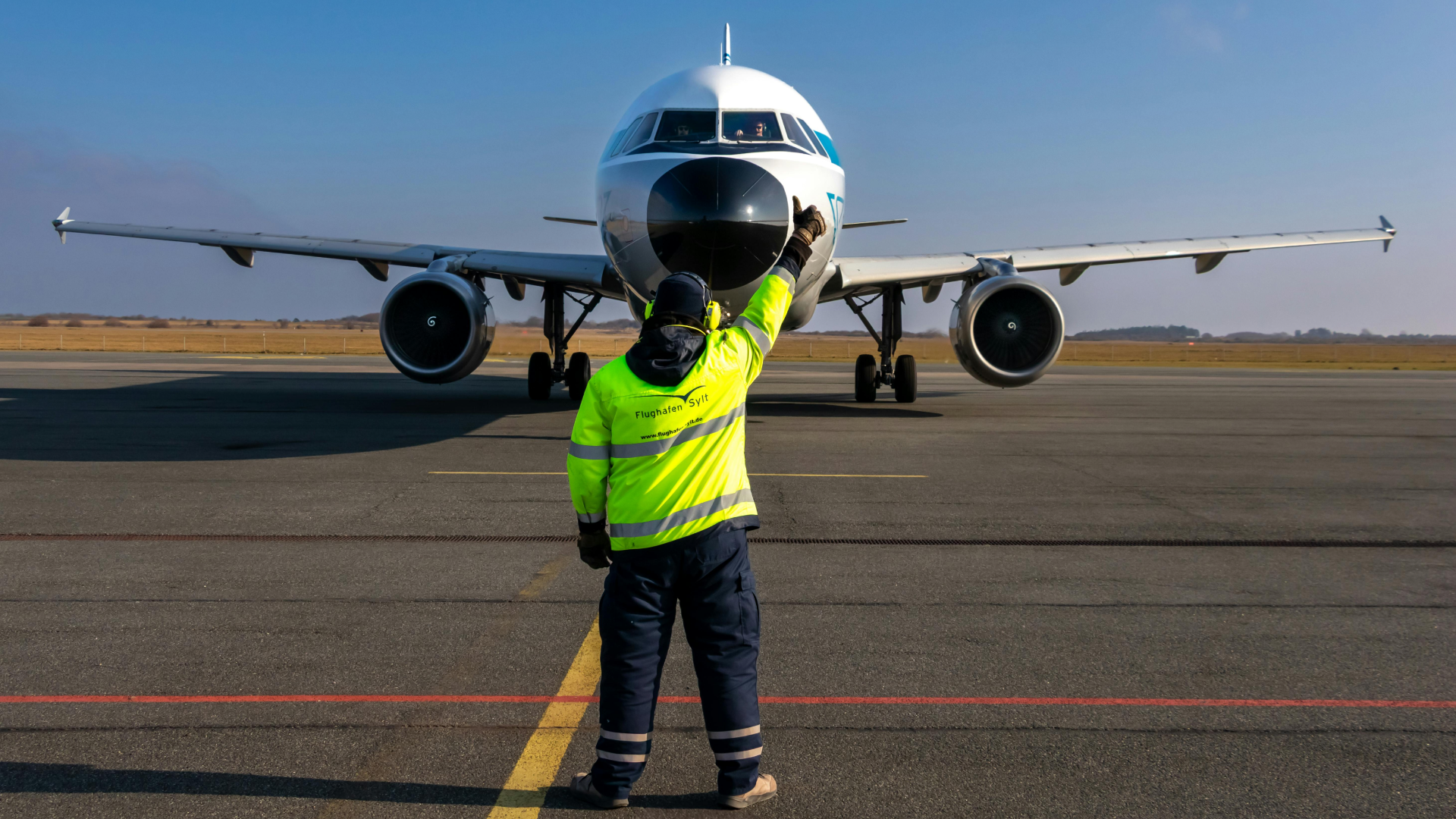
NeuroUX helps safety and operational teams bring objective alertness checks into real workflows — without adding unnecesary friction for workers or supervisors.

Easy Deployment
Workers can complete assessments on phones or tablets with no app download required.

Supervisor Alerts
Supervisors receive Slack, email, or SMS alerts when workers are identified as Not Ready.

Dashboard
View fatigue status and trends across teams, shifts, and locations in one place.

Ready/Not Ready Results
Workers and supervisors receive clear Ready/Not Ready results immediately after each check.

Scheduling Sync
Connect fatigue checks with existing scheduling and shift management tools.

Custom Safety Prompts
Add safety reminders or questions before each assessment.
Psychomotor Vigilance Test
Gold Standard For Fatigue
Assesment
NeuroUX Fatigue Monitoring Platform is based on the Psychomotor Vigilance Test (PVT), widely recognized as the gold standard for measuring fatigue-related impairment in alertness and reaction time. Backed by decades of sleep and circadian research, PVT is objective, scientifically validated, and well suited for safety-critical environments.
- Decades of peer-reviewed sleep and circadian research
- Sensitive to sleep loss and circadian misalignment
- Resistant to learning effects, so it can be repeated over time
Research-Backed
Decades of peer-reviewed sleep, fatigue & circadian research
Highly Sensitive
Sensitive to sleep loss, fatigue, and circadian misalignment
Fast Result
Takes less than 3 minutes to complete
Our Clients
Our Clients
Results
NeuroUX has been used across operational and research settings to measure alertness, reaction time, and cognitive readiness in real-world conditions.
Lorem ipsum dolor sit amet, consectetur adipiscing elit, sed do eiusmod tempor incididunt ut labore et dolore magna aliqua.








Real Applications, Real
Results
NeuroUX has been used across operational and research settings to measure alertness, reaction time, and cognitive readiness in real-world conditions.
Built for every High-Stakes Environment

Transportation

Mining
Manufacturing

Aviation

Healthcare

Logistics

Construction

Energy
Use Cases
Results
NeuroUX has been used across several operational and research settings to measure alertness, reaction time, and cognitive readiness in real-world conditions.
NeuroUX has been used across several operational and research settings to measure alertness, reaction time, and cognitive readiness in real-world conditions.
Use Cases
Real Applications, Real
Results
NeuroUX has been used across operational and research settings to measure alertness, reaction time, and cognitive readiness in real-world conditions.
Healthcare

Post-Call Physician Alertness | TriHealth
Study the effects of creatine supplementation on alertness and fatigue-related changes following overnight physician call.
Sports
Monitoring Athlete Fatigue | Adelaide Football Club
Tracking fatigue across training and competition to support recovery and workload decisions.
Aviation
Flight Crew Fatigue & Alertness | University of Padua
Measuring alertness and sustained attention in flight crews across rest and demanding work periods.

Why NeuroUX
NeuroUX is a leading provider of scientifically validated cognitive assessments trusted across research, clinical, and operational environments. Our tools help organizations measure fatigue, attention, performance, and brain health using objective, actionable data grounded in years of research.
Our PILOT PROGRAM
If your organization is exploring fatigue monitoring solutions, we’d be happy to collaborate on a pilot program based on your operational needs.
BOOK A FREE DEMOMake Fatigue Measurable



