Platform Features
Powerful tools designed for digital health research. From participant engagement to real-time monitoring, NeuroUX provides everything you need to conduct cutting-edge studies.

JITAIs
Just-In-Time Adaptive Intervention (JITAI) framework leverages real-time data and behavioral context to provide timely, meaningful support that adapts to each participant’s unique patterns and needs. By analyzing participant responses, sensor data, and engagement behavior, researchers can design interventions that improve both participant outcomes and study effectiveness.
Key capabilities include:
- Context-aware intervention delivery based on real-time participant data.
- Customizable triggers using EMA responses, behavioral patterns, or thresholds.
- Use wearable signals like heart rate, sleep, steps, and stress to trigger timely interventions.
- Support for personalized messages, prompts, and behavioral nudges.
Crisis Alerts
Designed especially for high-risk and safety-sensitive studies such as suicidal ideation research. This feature allows research teams to receive immediate notifications when participant responses indicate elevated risk. When participants complete EMA surveys or assessments, responses are continuously evaluated against predefined risk criteria. If concerning patterns or indicators are detected, alerts are triggered instantly, empowering research teams to take timely and appropriate action.
Key capabilities include:
- Instant alerts triggered by predefined EMA responses or risk thresholds.
- Designed for suicide risk monitoring and safety-critical studies.
- Real-time notifications delivered to research teams as data is collected.

Reward Screens
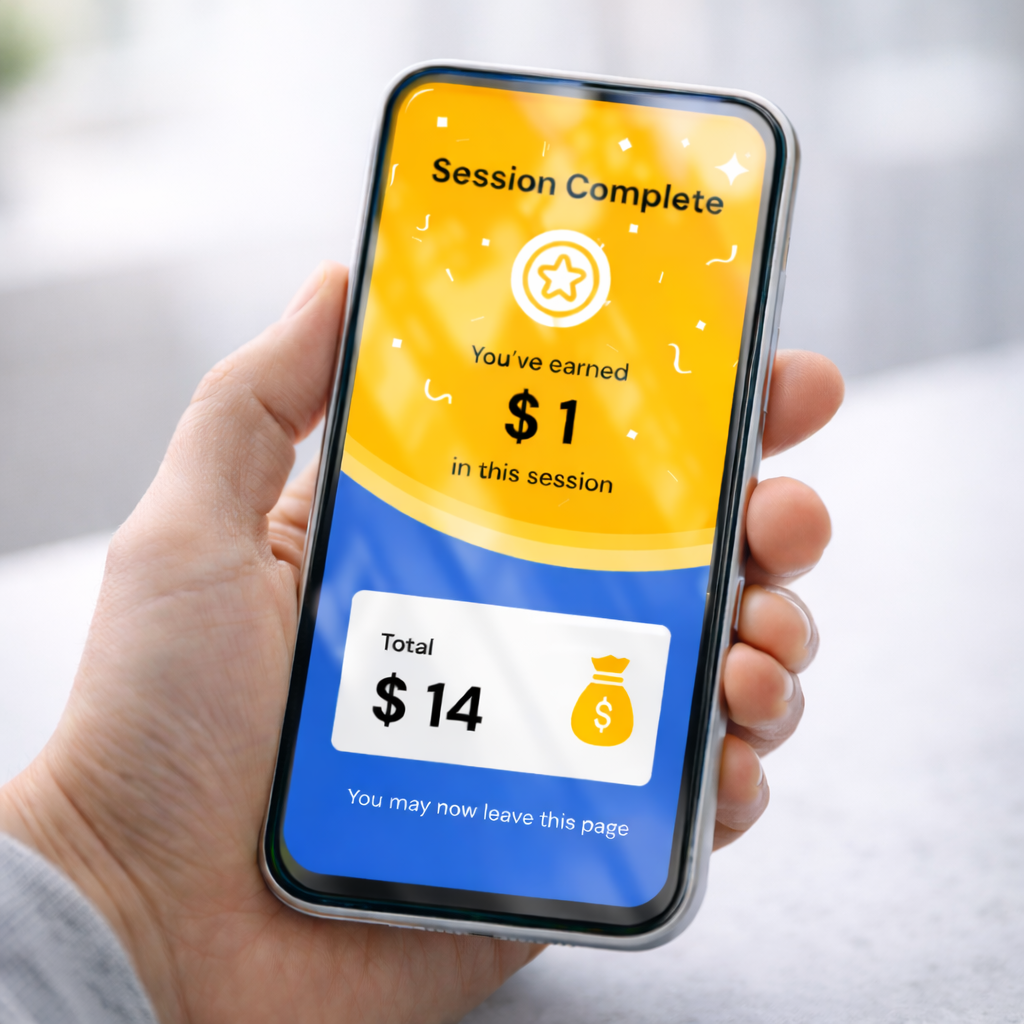
The Reward Screen provides participants with clear, real-time visibility into their study compensation, reinforcing engagement and sustaining adherence throughout the study. Displayed at the end of each session, the reward screen shows both session-level earnings and cumulative progress, creating a strong sense of motivation and goal attainment, especially in longer protocols where adherence typically declines.
Key capabilities include:
- Transparent tracking of per-session and total compensation.
- Configurable milestone and bonus logic to sustain engagement in multi-week studies.
- Researcher-facing compensation tracking within the compliance dashboard to eliminate manual calculations.
E-consent
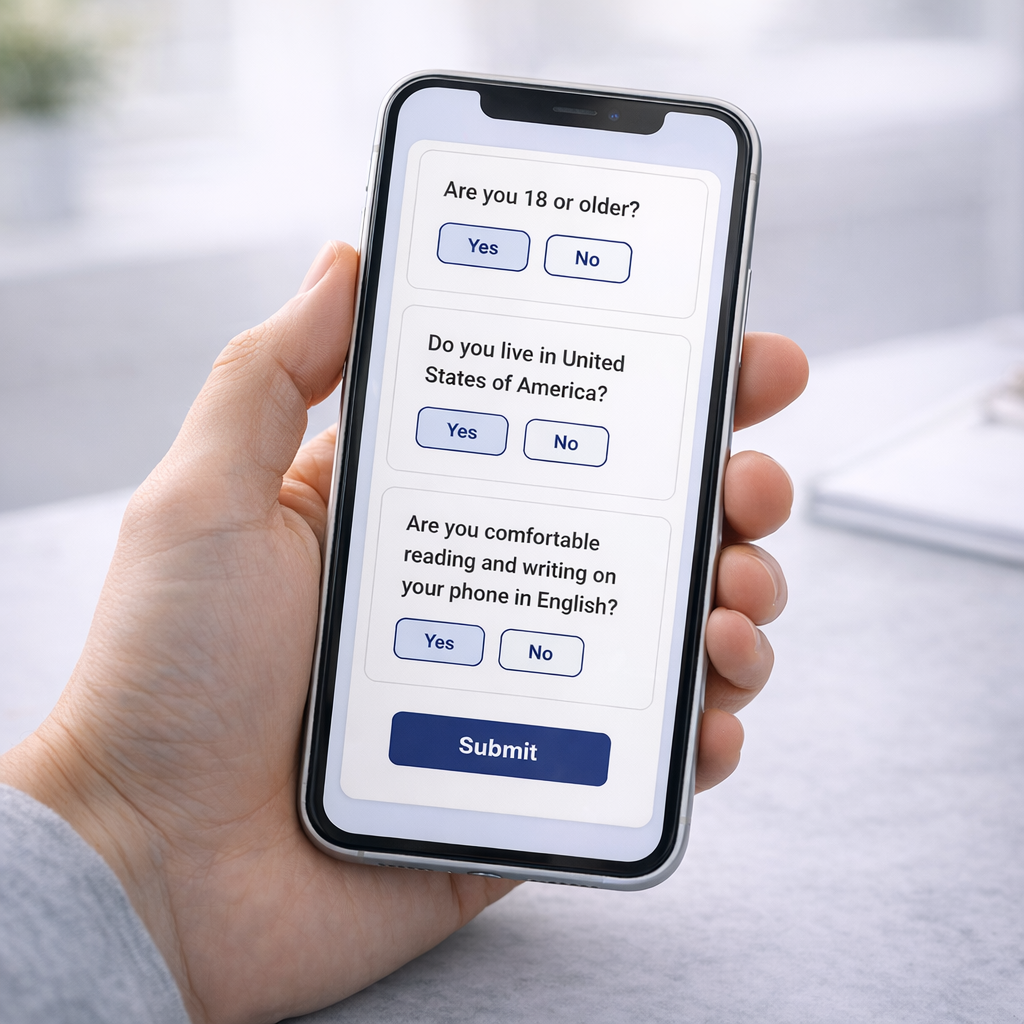
Provides a mobile-friendly electronic consent (E-Consent) experience that allows researchers to securely obtain informed consent from participants before study enrollment. Participants receive a consent link via text message and are guided through a clear, step-by-step interface that explains study details, risks, data use, and participation requirements, followed by a brief comprehension check to ensure understanding.
Key capabilities include:
- Mobile-optimized, step-by-step consent flow delivered via secure link
- Built-in comprehension testing to verify participant understanding before enrollment
- Customizable consent content, questions, and eligibility checks based on study needs
- Support for IRB-compliant disclosures, risks, and data-use explanation

Calorie Tracking
The Calorie Tracking feature lets participants log food intake by uploading a photo of a food item. After submission, an estimated nutrition breakdown, such as calories, weight (grams) and protein, is returned and stored with a timestamp for easy review and analysis. This makes it simple to capture dietary data with minimal participant effort while giving researchers structured, analyzable outputs.
Key capabilities include:
- Photo-based logging for single food items (capture → submit).
- Automatic nutrition estimates (calories + macro/nutrient fields) returned in a structured format.
- Timestamped entries linked to participant IDs for longitudinal tracking.
- Export-ready dataset to support downstream analysis and reporting.
Performance Feedback
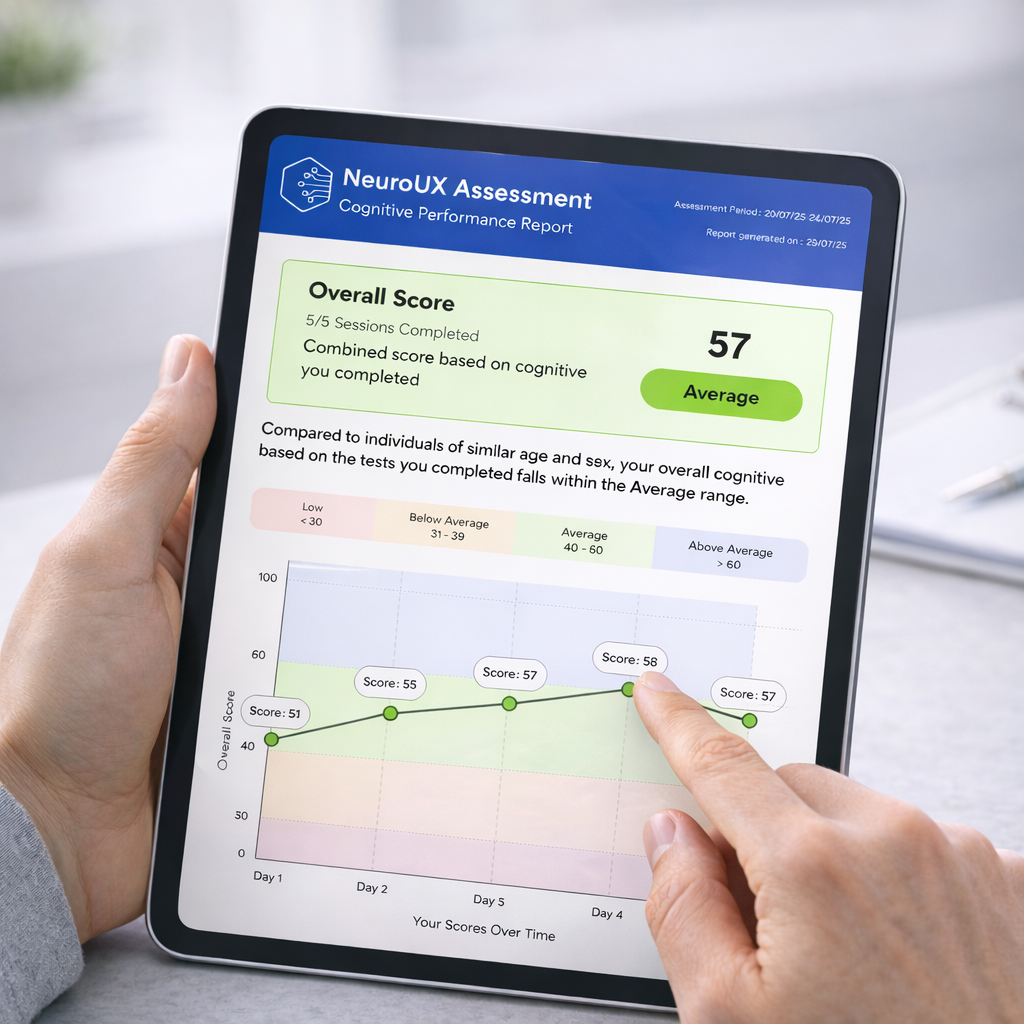
Performance feedback lets you generate clear, end-of-study reports that summarize cognitive performance across sessions. Reports can be shared with participants as a simple, easy-to-understand snapshot, or provided to researchers as a richer summary of trends over time. By showing overall scores and session-by-session changes, this feature helps teams communicate progress, study impact, and engagement in a structured, visual format.
Key capabilities include:
- End-of-study performance summaries with score trends across sessions.
- Participant-friendly view (overall score + simple interpretation) and researcher-ready reporting.
- Shareable report output (e.g., downloadable or exportable format) for easy distribution.