

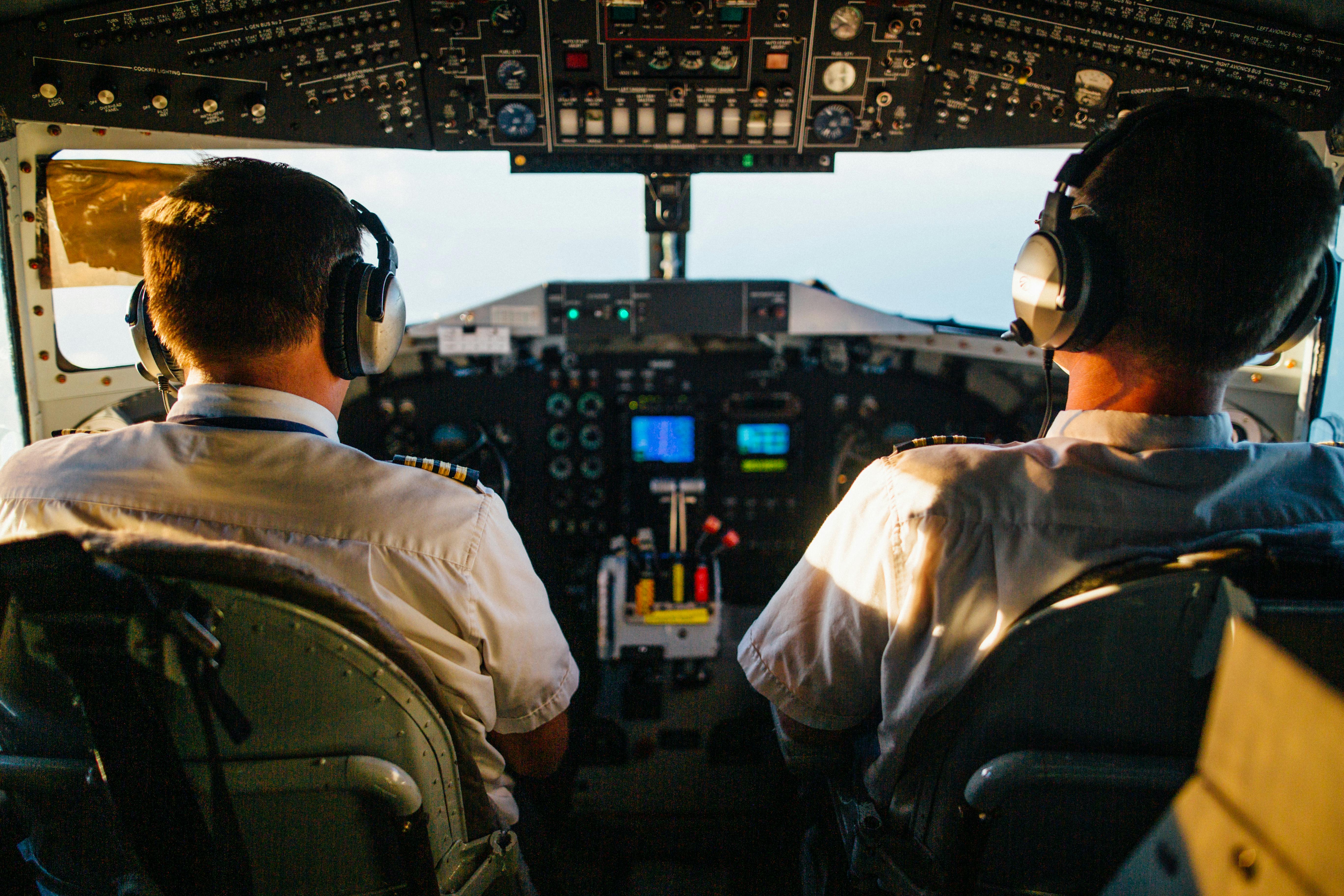
Aviation work places sustained demands on attention, reaction time, and decision-making. For pilots and flight attendants, fatigue can build across early starts, long duty periods, irregular schedules, and demanding flight blocks.
Much of that risk is difficult to see from the outside. A crew member may look composed and ready while their attention is under strain. That is why performance-based measures can be useful: they provide an additional signal beyond self-report, schedule data, or observation alone.
A recent project at the University of Padua used the NeuroUX PVT (Psychomotor Vigilance Task), to study sustained attention in the aviation flight crew community.
Objective
The objective of the project was to evaluate changes in sustained attention across different fatigue conditions in flight crew members. By comparing the brief PVT-B (3 minutes) performance on a rest day with performance after a demanding block of work shifts, the project aimed to better understand how operational fatigue may affect cognitive readiness in aviation settings. Data was collected over approximately one month.
Studying Attention Across Rest and Fatigue Conditions
The project compared flight crew performance across two conditions:
- A rest day, used as a baseline.
- The end of a demanding block of work shifts, used as a fatigue condition.
This kind of setup reflects a practical challenge in aviation fatigue research: attention needs to be measured in a way that is simple enough to use remotely, but structured enough to produce meaningful cognitive readiness data.
Why PVT Fits This Use Case
The Psychomotor Vigilance Task is widely used to measure sustained attention and reaction time. Participants respond to visual stimuli as quickly as possible, while the test captures performance patterns such as response speed and attention lapses.
For aviation research, that matters because sustained attention is central to readiness. When fatigue affects alertness, it may show up as slower responses, more variability, or missed responses.
NeuroUX’s Fatigue Monitoring Platform, based on PVT, supported the study by making the assessment remote, fast, and user-friendly. Flight crew members were able to complete the PVT-B during rest conditions and after demanding work blocks without requiring a lab visit or complex setup.
Client Testimonial
“NeuroUX’s Fatigue Monitoring Platform, based on the brief PVT-B, was efficient, user-friendly, and well suited to remote data collection with pilots and flight attendants. The team’s responsiveness, collaboration, and genuine interest helped the project run smoothly from setup through data collection.”
Part of a Larger Fatigue Strategy
We do not see fatigue monitoring as a standalone solution.
A fatigue monitoring tool is most valuable when it sits inside a broader operational strategy that includes scheduling practices, fatigue education, reporting culture, supervisor training, workload management, and employee wellbeing initiatives.
In aviation, fatigue risk can be shaped by schedules, workload, sleep, circadian timing, and operational context. No single measure is the complete answer. But objective readiness checks can help make fatigue risk more visible, easier to discuss, and easier to integrate into everyday fatigue management decisions.
Studying or Managing Fatigue in Aviation?
If you are studying fatigue, attention, or cognitive readiness in aviation, or exploring stronger fatigue management practices for flight crew operations, we would be glad to hear from you. Reach out to explore how NeuroUX’s PVT-based Fatigue Monitoring Platform can support research and industry fatigue management programs.
.png)


