

A research protocol can specify exactly what a participant should do, when they should do it, and what data needs to be collected. But there's one part of the study that's often much less structured: how we communicate with participants.
A participant forgets to take their medication. Someone misses a scheduled assessment. Another participant has a question about an instruction but doesn't know whom to contact. Meanwhile, research teams spend hours sending reminders, following up on missed activities, and trying to keep participants on track. These might seem like small operational problems, but over the course of a longitudinal study, they add up. They affect protocol adherence, data completeness, and ultimately, how reliably a study can answer its research questions.
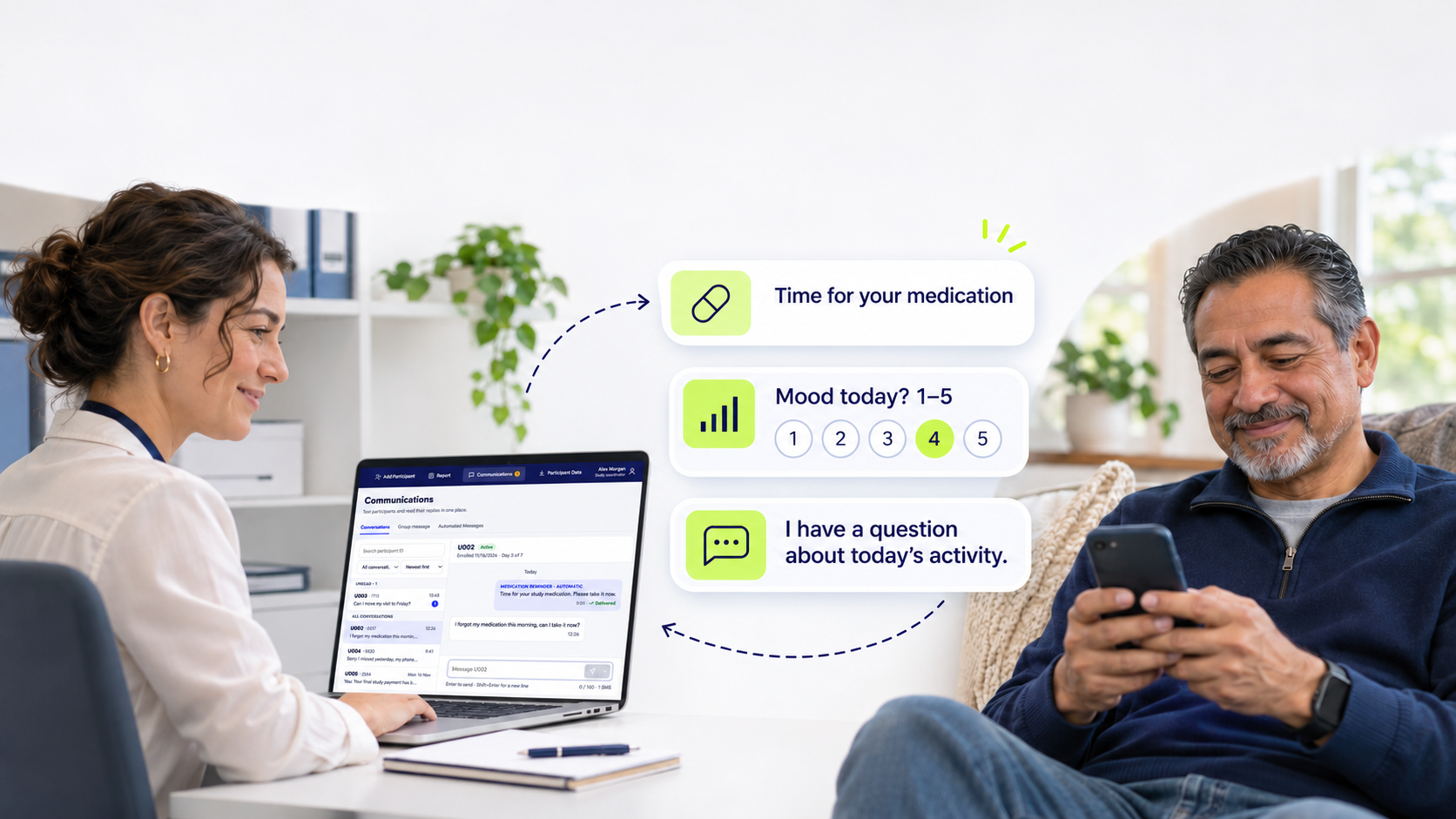
Today, we're introducing NeuroUX Engage, an SMS messaging platform that allows research teams to send automated reminders and ad hoc messages, manage two-way conversations with participants, and collect participant-reported data, all from one centralized dashboard.
Why do research teams need a messaging platform?
Much of the communication involved in running a study is still managed manually, sometimes through individual staff members' phones or across different messaging services. This makes it difficult to maintain consistent communication, track participant interactions, and ensure timely follow-ups. Without a shared system, research teams may have limited visibility into which participants have been contacted, who has responded, and which conversations still need attention. When responsibilities change or staff members leave, important communication history can also be lost.
NeuroUX Engage gives research teams a centralized place to manage these interactions. Authorized team members can view conversations, respond to participants, and maintain continuity throughout the study. Communication stays with the study, even when the people managing it change.
For participants, the experience is equally straightforward. Since Engage works through standard SMS, they don't need to download an additional app or create another account to receive messages, respond to the research team, or complete brief check-ins. They can use their phone's existing messaging app, making it easier to stay connected throughout the study.
What research teams can do with Engage?
Automated Reminders and Ad Hoc Messaging
Research teams can schedule automated SMS messages around the study protocol, whether that's medication dosing, upcoming visits, behavioral interventions, or daily activities. Messages can follow individual participant timelines, study days, or specific treatment periods. Teams can also send ad hoc messages to follow up on missed assessments, clarify instructions, or communicate unexpected schedule changes.
Participant-Initiated Messaging
Participants can also contact the research team directly through SMS to ask questions, clarify instructions, report problems, or share feedback. Research staff can respond through the Engage dashboard, providing participants with a direct channel for communication throughout the study.
SMS-Based EMA and Adaptive Interventions
NeuroUX Engage supports structured questions and responses through text messaging, allowing researchers to collect brief symptom check-ins, adherence confirmations, mood ratings, and other forms of micro-EMA and electronic patient-reported outcomes (ePRO). Depending on the protocol, responses can trigger conditional follow-up questions, scoring, or predefined alerts. It can also support just-in-time adaptive interventions (JITAIs), where the timing or content of an intervention depends on a participant's current state or behavior.
Practical Use Cases
NeuroUX Engage can be used across clinical trials, observational studies, behavioral research, and other longitudinal study designs. Some practical applications include:
- Participant questions, feedback, and concerns: Give participants a direct SMS channel to ask questions, report concerns, or share feedback, while keeping conversations accessible to the research team.
- Medication and treatment adherence: Send dosing reminders, request adherence confirmations, and follow up when participants report missed doses.
- Participant engagement and retention: Maintain regular contact during long studies, check in with inactive participants, and address barriers to continued participation.
- Study visit coordination: Send appointment reminders, preparation instructions, scheduling updates, and follow-ups after visits.
- Wearable and device adherence: Remind participants to wear, charge, or synchronize study devices, helping reduce gaps in data collection.
- Symptom monitoring and micro-EMA: Collect brief participant-reported responses through SMS as part of the study protocol.
Over the past eight years, we've built NeuroUX around helping researchers collect data in real-world settings. Along the way, we've seen how valuable something as simple as an SMS reminder can be. We already use automated text reminders to help participants complete cognitive tests, EMA surveys, and other scheduled study activities. NeuroUX Engage builds on that experience, giving research teams a dedicated platform to manage participant communication, support protocol adherence, and keep participants engaged throughout their studies.



